BETA

The EDM Council is pleased to add search capabilities to our website. This is currently in beta (testing) mode.

We appreciate any feedback regarding the new search functionality or on any aspect of your website experience.

Contact Us

FIBO®

Financial Industry Business Ontology

The Financial Industry Business Ontology (FIBO) is a global, standardized ontology (formal knowledge model) designed to represent financial concepts, terms, and their relationships in a precise, machine-readable way. It makes financial data unambiguous, so both humans and machines interpret it the same way. Think of it as a “dictionary + grammar + knowledge graph” for finance terms that all kinds of financial institutions, companies, and users of financial information can use to make financial data easier to manage and govern, fuel analytic tools, and optimize AI engines.

Developed and maintained by the EDM Association in collaboration with industry subject matter experts (SMEs), FIBO is open-source, rigorously governed, and used globally by scores of institutions committed to making their data more consistent and usable across their architectures.

What is FIBO?

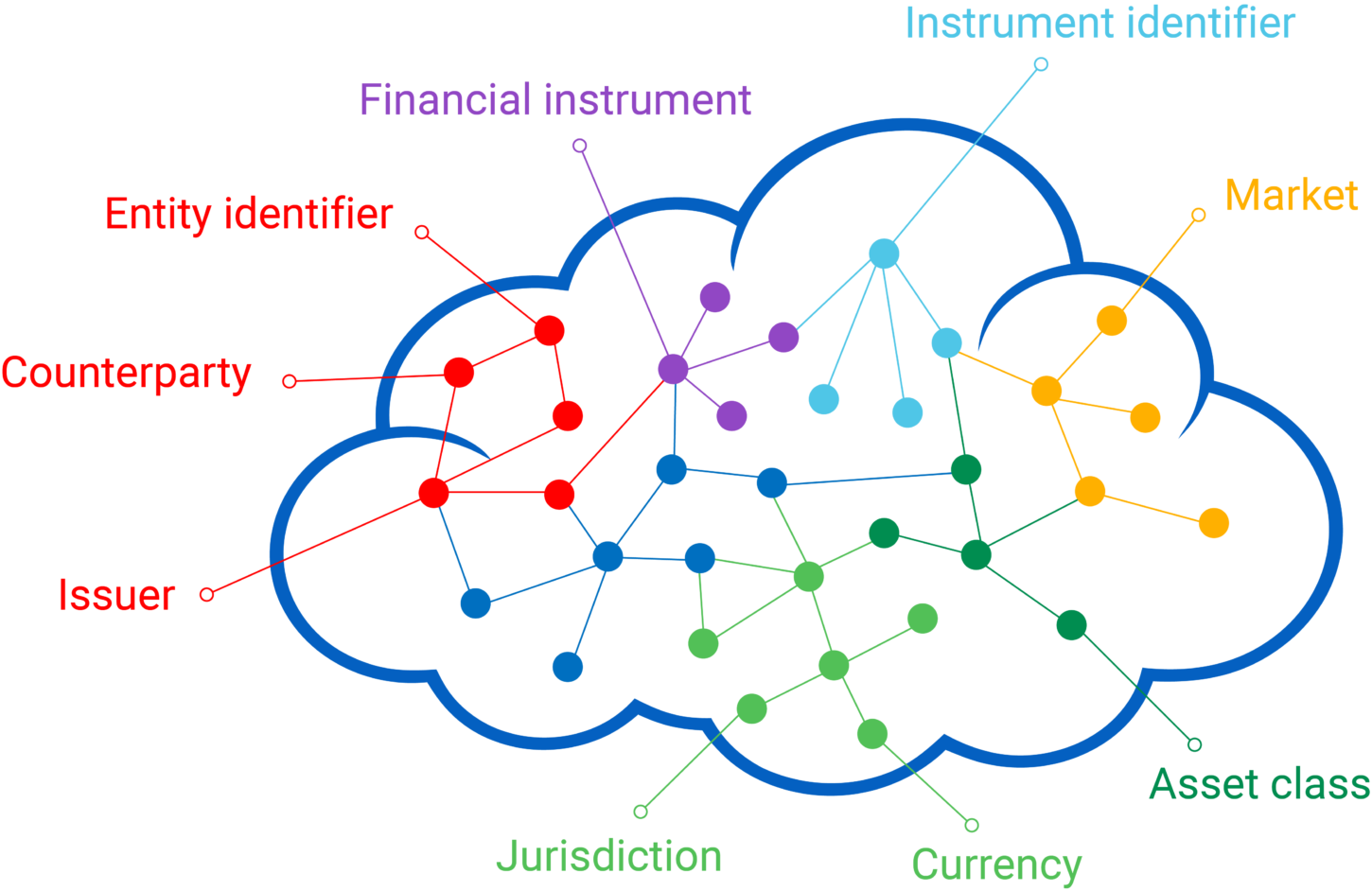
FIBO provides a common, semantically precise, and machine-readable way to describe financial concepts and their relationships across systems, business units, companies, and supply chains. Built on knowledge graph technology, it can be used to bridge conventional (e.g., row-and-column) databases as well as support the critical foundation of trusted data for the most current (and future) AI engines.

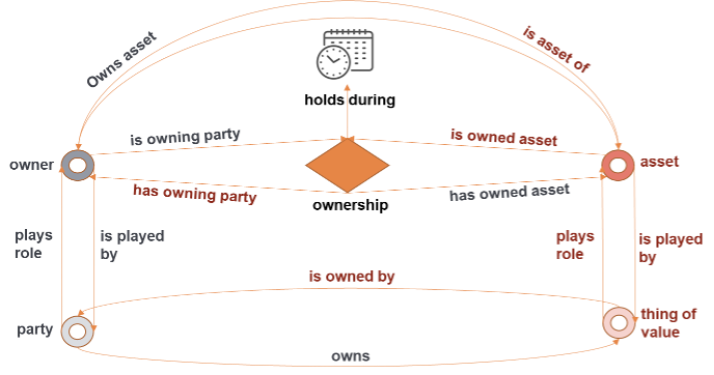
For example, across a typical institution “counterparty,” “client,” and “customer” might mean different things across systems. With FIBO, all systems can map to a shared concept (e.g., Legal Entity / Party), and all relationships (ownership, contracts, exposures) are explicitly defined such that complex and critical analysis – traditional, graph-based, or AI – can be carried out.

A line drawing depicting a model of owners and assets

How is FIBO organized?

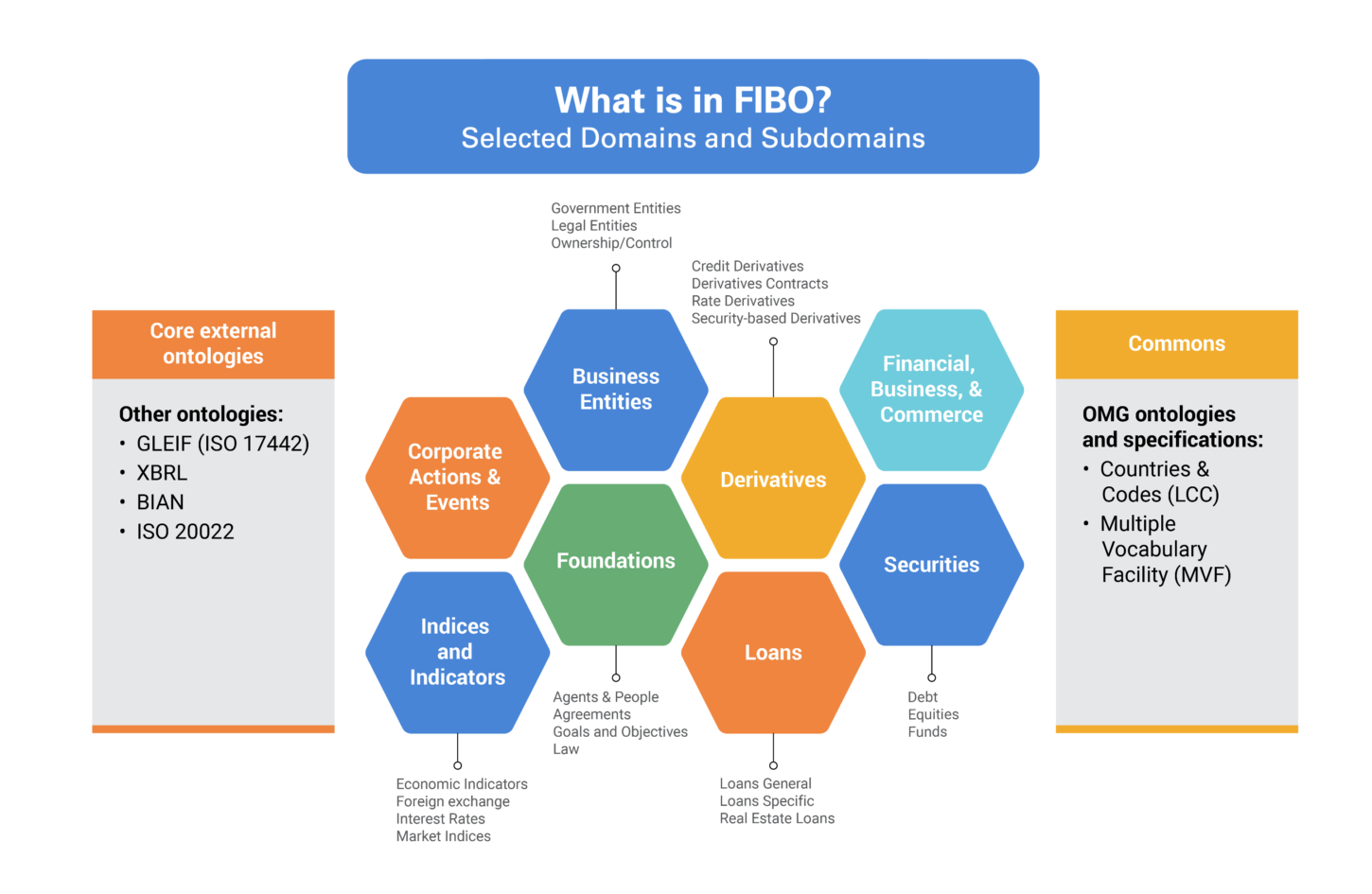
FIBO is organized into modular domains covering all major areas of finance. Within each domain are defined:

  • Concepts (e.g., “Bond”)
  • Relationships (e.g., “issued by”)
  • Attributes (e.g., “maturity date”)

The domains and the concepts can be viewed and navigated individually and as part of a larger knowledge graph using the EDM Association’s FIBO Viewer.

Access the FIBO Viewer

A chart depicting the various financial domains of the FIBO ontology

FIBO's formats

FIBO is available in RDF/OWL, and can be transformed into other formats and used with any analytical and data management tools. It is reviewed and updated quarterly by a team of ontologists and financial sector subject matter experts.

FIBO Graph

Explore the FIBO knowledge graph

FIBO Viewer

Easily access FIBO's structure and content in a streamlined way

FIBO Viewer

FIBO Hierarchy

Dive deep into the relationships of any domain

Using FIBO: AI and More

The most important emerging use for FIBO today is to optimize AI platforms because ontologies radically improve the ability for AI tools to use data to carry out better and more precise reasoning. As the ontology for finance, FIBO provides the semantic precision and structure to ensure that investments in AI really pay off.

Banks, investment companies, insurers, and a wide range of other financial institutions around the world have deployed FIBO across many other critical use cases, including:

  • AI-based data discovery and classification
  • Data standardization across firms and systems
  • Enterprise interoperability
  • Regulatory reporting consistency, e.g., for BCBS 239
  • Provisioning critical risk analysis and analytics, e.g., for KYC and AML
  • Integration of heterogeneous data sources across business units and enterprises

Naturally, use of ontologies improves an organization’s data management such that conformance against EDM Association’s DCAM (Data Management Capability Assessment Model) is more complete, greater value for the organization.